
UNDERSTANDING YOUR CONCERN
Lower back pain: start with the whole picture.
Lower back pain can have several contributing factors, and a single cause is not always clear. Symptoms may settle, persist or return. The way pain behaves, your health history and a physical assessment all help guide appropriate next steps.
What you may want to discuss
Select a topic to learn more.
Stiffness during or after sitting
Notice how long you have been sitting, whether changing position makes a difference and how the stiffness settles. These details help your practitioner discuss movement options and the demands of your day without assuming a single posture is the cause.
Discomfort with bending, lifting or standing
Tell your practitioner which task is difficult, the load involved and whether symptoms stay in the back or travel into a leg. An assessment can guide task modifications and exercises suited to what you need to do.
Recurring tightness during training
Bring examples of the exercise, training volume and point in the session when tightness appears. The plan can consider strength, movement and recovery alongside symptoms, instead of relying only on stretching the sore area.
Difficulty returning to daily activity
Choose a meaningful task such as walking, carrying groceries or managing a work shift. Your practitioner can use that goal to discuss a starting level and how to review progress toward it.
YOUR ASSESSMENT
What your assessment involves
Tell us when symptoms began, which movements change them, and whether you have pain or altered sensation into a leg. Your practitioner can assess relevant movement, strength and functional tasks. We also ask about work, training and previous episodes, and explain when medical assessment may be needed.
RECOVERY & MOVEMENT
Rehabilitation and return to activity
Your plan is built around meaningful activities: a workday, carrying groceries, strength training or time outdoors. We can discuss manageable activity, movement and strengthening options, and hands-on treatment where appropriate. The plan changes with your response rather than following a fixed sequence of visits.
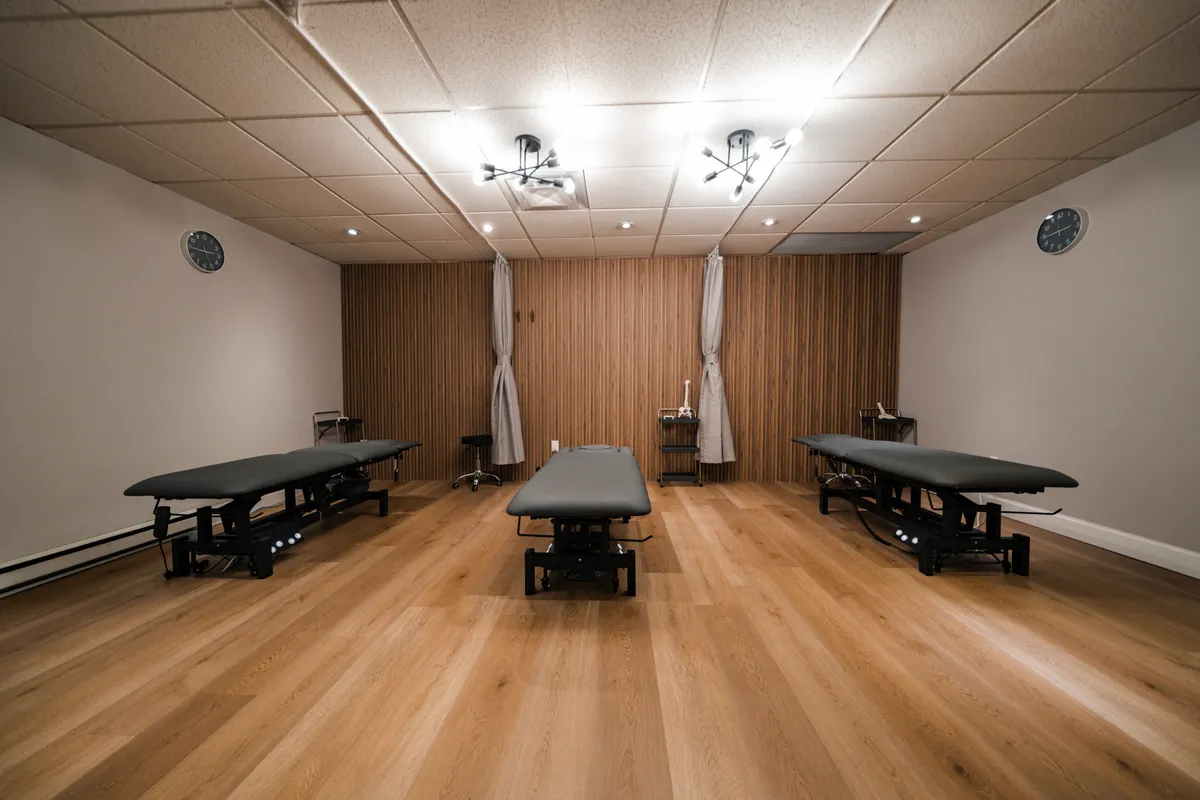
At our Bridgeland clinic and private training space, we connect care with the movements you want to return to. You can ask questions, discuss preferences and make decisions with your practitioner. If a different type of care is needed, we’ll explain the next step.
When medical advice comes first
Seek emergency medical attention for back pain with new bladder or bowel changes, numbness around the groin, or weakness or numbness in both legs. Back pain after a serious accident also needs emergency assessment. Sudden severe or rapidly worsening pain, or pain with fever or feeling unwell, warrants urgent medical advice.
QUESTIONS YOU MAY HAVE
Common questions about lower back pain
Is tightness the same as a diagnosis?
No. Tightness describes a sensation. Assessment considers your symptoms and function so the plan is based on more than one feeling or a label.
Should I stop all activity?
For many people with uncomplicated back pain, staying active is encouraged. The right activities and amount depend on your situation. Your practitioner can discuss modifications, and you should seek advice if symptoms worsen.
Do I need physiotherapy or chiropractic care?
Both services at ReviveLab use assessment and movement-focused care. If you are unsure where to start, call the clinic and explain your main concern.
How long will rehabilitation take?
There is no single timeline. Your history, goals, assessment findings and response guide recommendations. We reassess progress and discuss next steps with you.
FROM THE MOVEMENT JOURNAL
Why does my lower back keep tightening up?
Read the articleFurther reading
General information, not a personal diagnosis. These public patient resources informed the general symptom and medical-advice sections.