
01 /
Recovery & soft tissue · CALGARY
Massage therapy in Bridgeland
Make room for better movement.
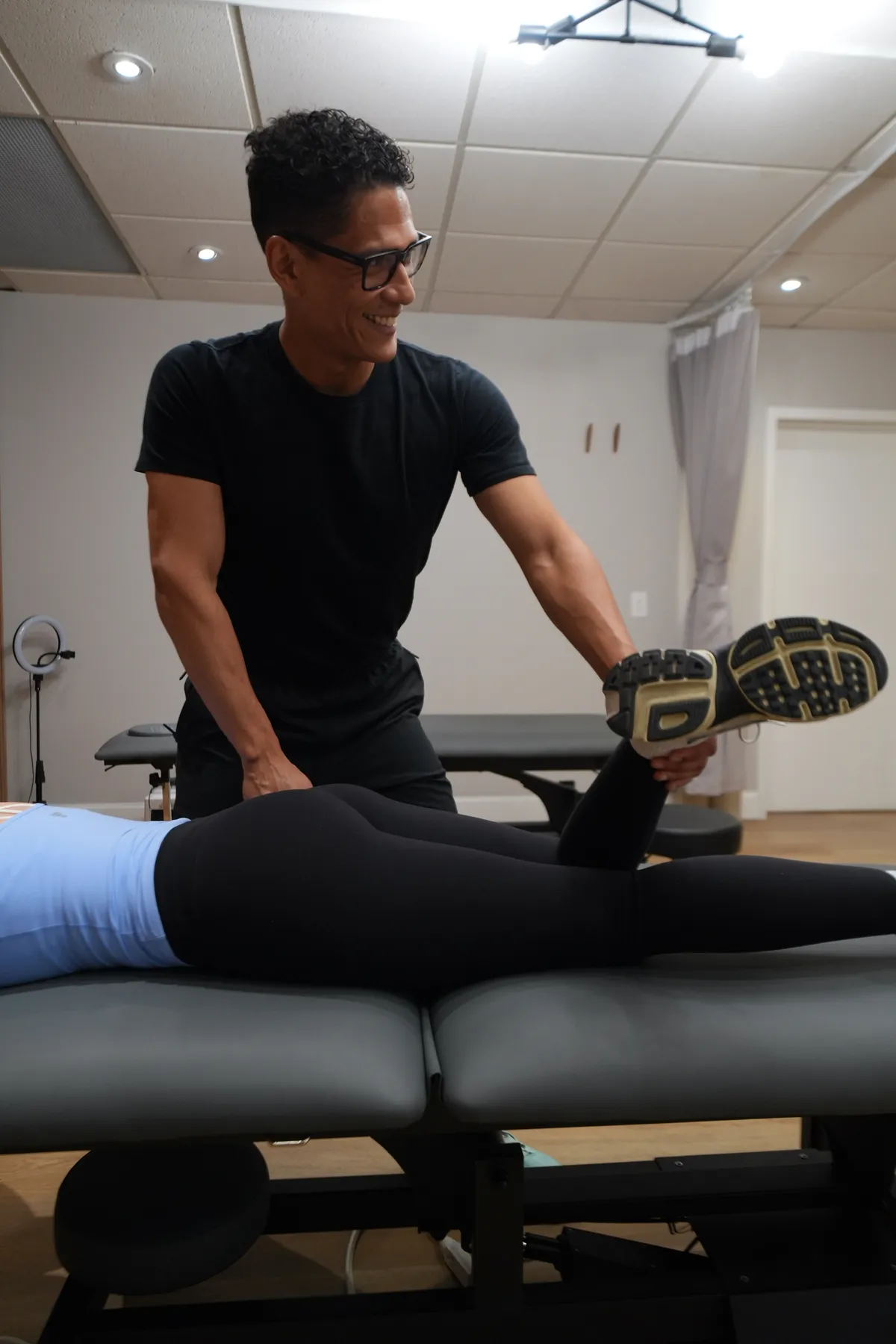
Sports and deep tissue massage at ReviveLab are guided by your goals. Whether you spend your day at a desk, on your feet or training, your therapist assesses your concerns and adapts pressure, techniques and home care to you.
Treatments from $65 · 30 / 60 / 90 / 120 min
CARE BUILT AROUND YOU
Is massage therapy right for you?
We begin by understanding what you’re experiencing and what you want to get back to. An assessment helps us decide whether this approach fits your needs and what other care may be appropriate.
Concerns we can discuss
Select a topic to learn more.
Runners and endurance athletes
Running and endurance training involve repeated demands over time. Describe your recent distances, intensity, terrain, recovery and any event goals so your practitioner understands the context of your symptoms.
Massage can be discussed for soft-tissue concerns, while pain or an injury may call for a broader clinical assessment. ReviveLab also offers a separate running assessment with Danny or Daniel for observations and recommendations related to your run.
Golfers
Golf combines repeated swings, walking and sometimes long practice sessions. Tell your practitioner whether discomfort happens during the swing, after a round or with another activity, and mention recent changes in practice or equipment.
The assessment can consider relevant movement and strength alongside your symptoms. Treatment and exercise choices are discussed around a return to comfortable participation; a massage session alone cannot guarantee a change to your swing or score.
Recreational or high level athletes
Sport-related concerns need to be understood in the context of the sport: the movements, training schedule, recent changes and demands of competition. Your goal may be participation, confidence or a return to a previous level.
Tell your practitioner what happens during activity and afterwards. Care can bring together symptom assessment, appropriate exercise and a staged return to those demands, with communication between practitioners or coaches when appropriate and with your consent.
Gym-goers and strength-training enthusiasts
A new training block, a different exercise or a higher workload can be useful context for muscle or movement concerns. Bring examples of the lifts, positions or sessions that are difficult.
Your practitioner can discuss whether an exercise needs temporary modification and how care might fit with training. A coach can support programming and progression when appropriate, while injury assessment remains part of clinical care.
People recovering from muscle strains or overuse injuries
A strain involves a muscle or tendon; a sprain involves a ligament around a joint. Overuse concerns describe symptoms associated with repeated activity, but the exact problem still needs assessment.
The next step depends on how the injury happened, its severity and what you can currently do. Rehabilitation can work toward movement, strength and the demands of your activity. Massage or another technique is considered according to the stage and findings.
Desk or labour workers
A workday can involve long periods at a desk, repetitive tasks, lifting or time on your feet. The relevant question is how the demands of that day relate to your symptoms and opportunities to change position or recover.
Discuss your actual tasks and practical constraints. The plan may include movement options, strength work, task adjustments or hands-on treatment where suitable, rather than assuming that one posture explains every problem.
People with muscle tightness, tension or limited mobility
Tightness, tenderness and soreness describe sensations, not a diagnosis. Tell your practitioner how long they last, what changes them and whether they affect movement, sleep or activity.
Assessment helps determine which options are appropriate. Massage, exercise, movement guidance or another approach may be discussed, with persistent or changing symptoms considered in the wider health picture. More pressure or more stretching is not automatically better.
A concern on this list is a starting point for assessment, not a diagnosis or a promise of a particular result.
UNDERSTAND YOUR CONCERN
Pain and injury guides
EXPLORE YOUR SYMPTOMS
Start with what you’re experiencing
These sections of our Symptoms directory can help you describe your concerns and prepare questions for an assessment. Your practitioner can help you choose appropriate care.
The directory covers several types of care. A link here does not mean this treatment is appropriate for every concern listed.
YOUR TREATMENT PLAN
What massage therapy may involve
Treatment is selected around the assessment, your preferences and your response over time. Your plan may include:
Select a topic to learn more.
Sports massage
Sports massage focuses the session on the physical demands of your training, work or activity. Your therapist discusses the areas that concern you and selects hands-on techniques and pressure around your goals.
You do not need to compete in sport to book. Tell your therapist about recent sessions, an upcoming event and any injury. Massage may be part of a wider plan with exercise or rehabilitation; it does not guarantee faster recovery or better performance.
Deep tissue massage therapy
Deep tissue massage uses focused pressure and slower hands-on techniques to work with selected soft tissues. The pressure should be adapted to the person and area being treated, rather than making intensity the measure of a good session.
Speak up about discomfort and tell your therapist about injuries, medicines or conditions that may affect treatment. You can request lighter pressure, a change of area or a pause. The session is one part of a plan for your symptoms and movement goals.
Mobility-focused treatment
Mobility work explores the movement available at a joint or through a task. It can include active movements, stretches or hands-on assistance selected for the area that feels limited.
The aim is to make the plan relevant to a real task, such as reaching, turning, walking or lifting. The range, pace and amount are chosen around your findings and response; forcing a painful movement is not the goal.
Home care exercises or stretches
Home care brings selected movements or stretches into the time between appointments. Your practitioner can show you the technique, explain its purpose and help fit it into your routine.
Ask how often to practise, what response is expected and when to adjust or stop. A useful plan is specific enough to follow and flexible enough to review when your symptoms, schedule or goals change. It should not depend on guessing from a generic exercise list.
What to expect at your appointment
02 /
Hands-on treatment tailored to goals
03 /
Recommendations for recovery between sessions
04 /
Home care exercises or stretches
We reassess as you progress. Recommendations, treatment choices and outcomes vary between people. Where appropriate, your practitioner can discuss working with other members of the team, with your consent.
Appointments in Bridgeland
Visit our clinic at 217 4 St NE, Unit 105, in Bridgeland, Calgary. See clinic hours, parking and directions, or compare treatment prices before booking.
Direct billing is available. Coverage and referral requirements depend on your insurance plan.
Coming from a nearby community?
All appointments are at our Bridgeland clinic. These guides can help you plan a visit from your area.
- Massage therapy in Crescent Heights, Calgary
- Massage therapy in Renfrew, Calgary
- Massage therapy in downtown Calgary
MEET YOUR PEOPLE
Meet your practitioners

Danny Nguyen
Registered Massage Therapist & Certified Personal Trainer

Daniel Silva Mendes
Registered Massage Therapist
Connected care.
PRACTICAL NEXT STEPS
Care that fits your life
People & everyday goals
Explore who we serveHome care & getting help
- Neck pain home care: comfortable movement without forcing a stretch
- Shoulder pain at home: make daily tasks easier while you seek answers
- Desk and workplace discomfort: home adjustments that fit a real workday
General education with warning signs and practical questions for an assessment.
WE’RE HERE TO HELP
Let’s talk about how you’re feeling.
You don’t need to have it all figured out before you book. Tell us what’s bothering you, and we’ll start there.
Book an appointment Or call 403 235 0535