
01 /
Mobility & function · CALGARY
Chiropractic care in Bridgeland
Care that sees the whole picture.
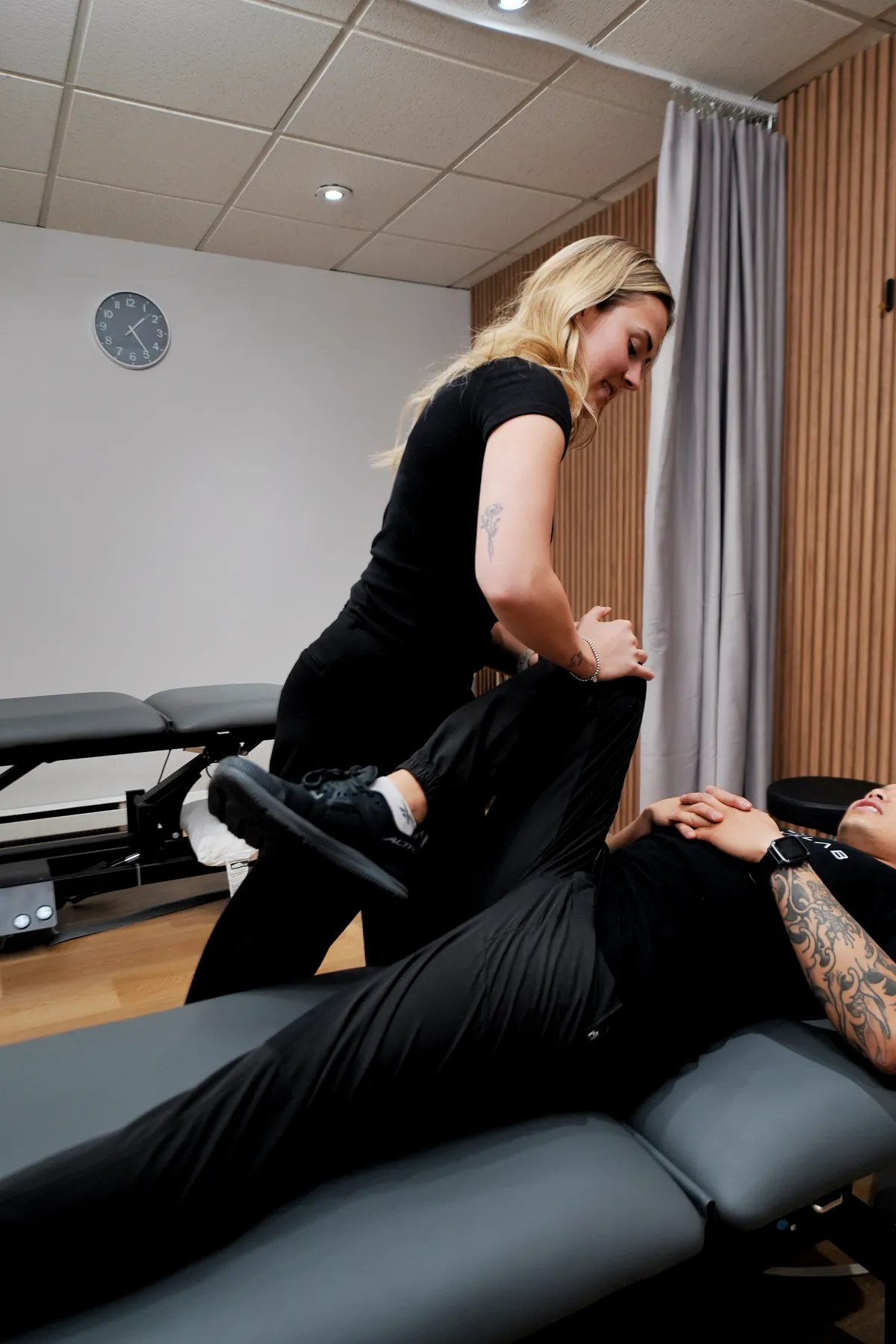
Movement-focused chiropractic care brings together hands-on treatment, soft-tissue work and exercise. Dr. Grace Campion takes the time to understand your concerns and develops an approach around your daily life, activity and goals.
Initial assessment · 60 min · $135
CARE BUILT AROUND YOU
Is chiropractic care right for you?
We begin by understanding what you’re experiencing and what you want to get back to. An assessment helps us decide whether this approach fits your needs and what other care may be appropriate.
Concerns we can discuss
Select a topic to learn more.
Athletes
Sport-related concerns need to be understood in the context of the sport: the movements, training schedule, recent changes and demands of competition. Your goal may be participation, confidence or a return to a previous level.
Tell your practitioner what happens during activity and afterwards. Care can bring together symptom assessment, appropriate exercise and a staged return to those demands, with communication between practitioners or coaches when appropriate and with your consent.
People with back, neck, shoulder or hip discomfort
Pain or stiffness around the spine can affect sitting, turning, lifting or sleep. The pattern, any symptoms into an arm or leg, and changes over time are more useful than assuming the location tells us the cause.
Your assessment considers relevant movement, health history and everyday demands. Explain any new weakness or altered sensation and mention a recent accident or medical advice so the practitioner can decide what care is appropriate.
People with posture or mobility limitations
A limitation may show up as difficulty with stairs, getting up, reaching, balancing or managing a usual activity. We start with the particular task and how it has changed for you.
Assessment can explore relevant movement, strength and control. The plan may combine targeted practice, graded exercise and useful adaptations. Sudden or unexplained changes should be discussed with a medical professional rather than assuming they are simply a fitness issue.
Active adults
Your goal may be a comfortable workday, regular walks, recreational sport or a return to the gym. You do not need to be an athlete or already have a diagnosis to start the conversation.
Tell us what you can currently do and what you want to build toward. An assessment or coaching discussion can help identify a sensible starting point and the service that best fits that goal.
A concern on this list is a starting point for assessment, not a diagnosis or a promise of a particular result.
UNDERSTAND YOUR CONCERN
Pain and injury guides
EXPLORE YOUR SYMPTOMS
Start with what you’re experiencing
These sections of our Symptoms directory can help you describe your concerns and prepare questions for an assessment. Your practitioner can help you choose appropriate care.
The directory covers several types of care. A link here does not mean this treatment is appropriate for every concern listed.
YOUR TREATMENT PLAN
What chiropractic care may involve
Treatment is selected around the assessment, your preferences and your response over time. Your plan may include:
Select a topic to learn more.
Manual therapy
Manual therapy is hands-on treatment of joints or soft tissues. Depending on your assessment and consent, it may involve massage, gentle movement or other techniques intended to address pain or restricted movement.
Your practitioner explains the technique and checks your comfort. Hands-on care can sit alongside exercise and self-management; it does not replace a plan for the activities you want to regain. Ask about alternatives if you prefer a different approach.
Joint mobilization
Joint mobilization uses controlled, hands-on movement of a joint. The practitioner chooses the direction and amount of movement after assessing the area and discussing your comfort.
It may be used to address stiffness or pain as part of rehabilitation. Any change from a hands-on technique is considered alongside active movement and home exercises, with the response checked over time. Ask how the technique fits your goals and what other options you have.
Soft tissue techniques
Soft-tissue techniques are hands-on approaches directed at muscles and surrounding tissues. They may include massage or sustained pressure, with the area, pressure and duration adapted to your assessment and preferences.
The purpose is discussed in terms of your symptoms and movement, rather than assuming every tender area needs the same treatment. Your practitioner can combine hands-on care with relevant exercise or activity guidance and reassess whether the approach is useful for you.
Corrective exercises
Exercise in rehabilitation is selected to address a specific finding or task. A plan may work on strength, control, endurance or movement, depending on what your assessment shows and what you want to do again.
The term “corrective exercise” describes a targeted exercise choice; it does not mean there is one perfect posture or movement for everyone. Your practitioner explains the purpose, helps you practise and reviews the plan as your ability and response change.
Rehabilitation strategies
Rehabilitation strategies connect the assessment with the steps needed for a return to daily activity, work or sport. The plan may combine exercise, education, activity changes and hands-on care where appropriate.
Ask which goals will guide progress, how you will review your response and what to do if things change. After surgery or a significant injury, recommendations also need to respect medical instructions and any restrictions from the treating team.
What to expect at your appointment
02 /
Personalized treatment
03 /
Manual therapy based on needs
04 /
Exercise and movement guidance
We reassess as you progress. Recommendations, treatment choices and outcomes vary between people. Where appropriate, your practitioner can discuss working with other members of the team, with your consent.
Appointments in Bridgeland
Visit our clinic at 217 4 St NE, Unit 105, in Bridgeland, Calgary. See clinic hours, parking and directions, or compare treatment prices before booking.
Direct billing is available. Coverage and referral requirements depend on your insurance plan.
Coming from a nearby community?
All appointments are at our Bridgeland clinic. These guides can help you plan a visit from your area.
- Chiropractor in Crescent Heights, Calgary
- Chiropractor in Renfrew, Calgary
- Chiropractor in downtown Calgary
MEET YOUR PEOPLE
Meet your practitioners

Dr. Grace Campion
Chiropractor
Connected care.
PRACTICAL NEXT STEPS
Care that fits your life
People & everyday goals
- Cyclists & active commuters
- Golfers & racquet-sport players
- Desk & remote workers
- Trades & manual workers
Home care & getting help
- Neck pain home care: comfortable movement without forcing a stretch
- A lower back flare-up: practical home care and warning signs
- Golf-related aches: home changes before your next round
General education with warning signs and practical questions for an assessment.
WE’RE HERE TO HELP
Let’s talk about how you’re feeling.
You don’t need to have it all figured out before you book. Tell us what’s bothering you, and we’ll start there.
Book an appointment Or call 403 235 0535