
01 /
Movement & rehabilitation · CALGARY
Physiotherapy in Bridgeland, Calgary
Your life moves. Your care should, too.
From everyday aches to a return to sport, physiotherapy starts with understanding you. We look at your symptoms, movement, health history and goals, then build a practical rehabilitation plan around what matters to you.
Initial assessment · 60 min · $135
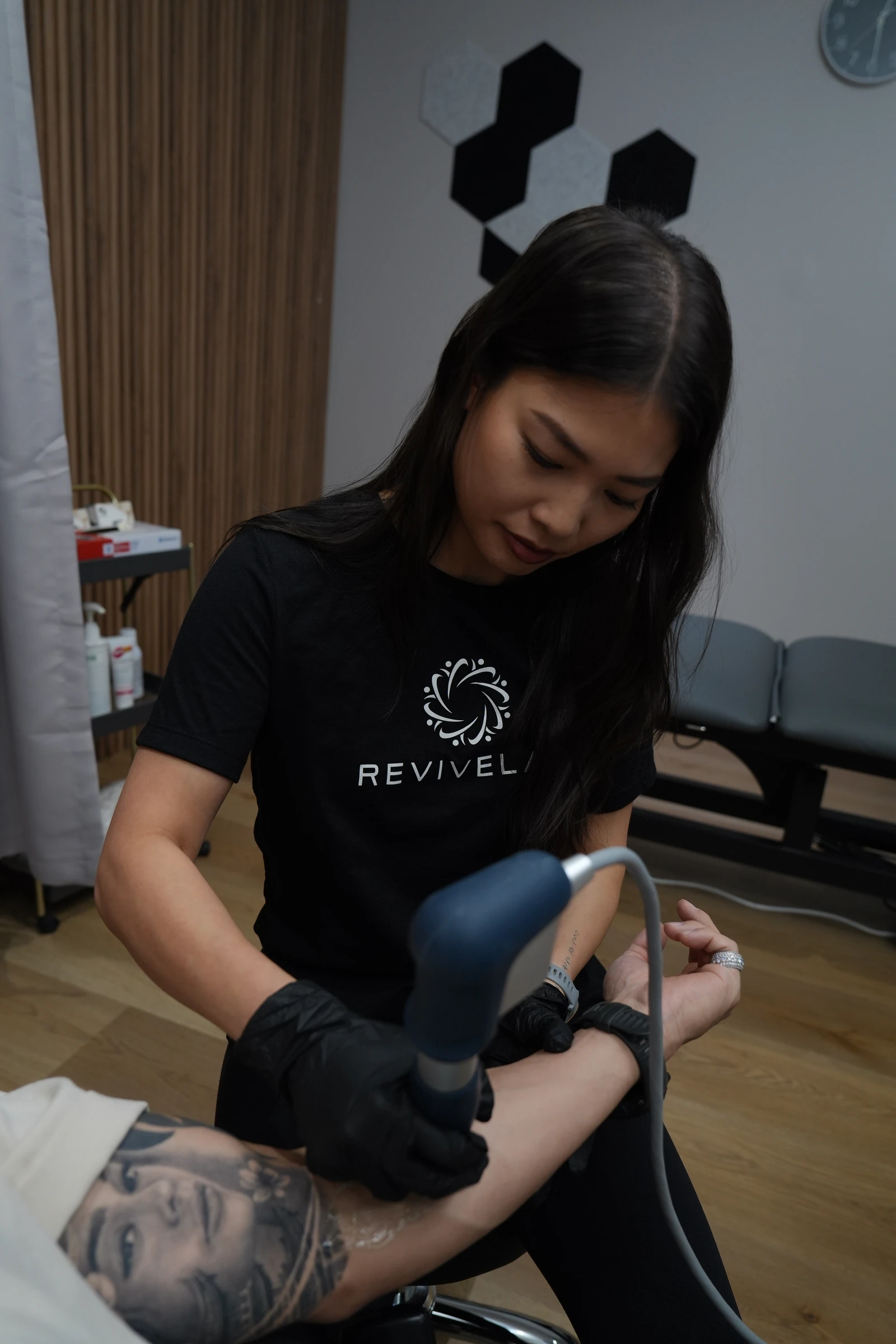
CARE BUILT AROUND YOU
Is physiotherapy right for you?
We begin by understanding what you’re experiencing and what you want to get back to. An assessment helps us decide whether this approach fits your needs and what other care may be appropriate.
Concerns we can discuss
Select a topic to learn more.
Back and neck pain
Pain or stiffness around the spine can affect sitting, turning, lifting or sleep. The pattern, any symptoms into an arm or leg, and changes over time are more useful than assuming the location tells us the cause.
Your assessment considers relevant movement, health history and everyday demands. Explain any new weakness or altered sensation and mention a recent accident or medical advice so the practitioner can decide what care is appropriate.
Shoulder, elbow and wrist concerns
Reaching, gripping, carrying and repetitive hand use place different demands on the upper limb. Tell us which task is difficult, whether there was an injury and whether symptoms extend into the hand.
Assessment can consider movement and strength relevant to that task. A plan may include exercise, adjustments to activity and appropriate hands-on options, with further medical assessment when indicated.
Hip, knee, ankle and foot concerns
Walking, stairs, squatting and running can bring attention to different parts of the lower limb. The location of discomfort is a starting point, alongside swelling, changes in activity and any difficulty bearing weight.
Your practitioner can assess the movements relevant to your goal and discuss an appropriate route into rehabilitation. Severe symptoms or a significant recent injury may need medical assessment first.
Muscle strains and joint sprains
A strain involves a muscle or tendon; a sprain involves a ligament around a joint. Overuse concerns describe symptoms associated with repeated activity, but the exact problem still needs assessment.
The next step depends on how the injury happened, its severity and what you can currently do. Rehabilitation can work toward movement, strength and the demands of your activity. Massage or another technique is considered according to the stage and findings.
Post-surgical rehabilitation
Recovery after surgery depends on the operation, the stage of healing and the instructions from your surgical team. Bring your procedure details, restrictions and any rehabilitation guidance to the assessment.
Your practitioner can discuss movement, strength and daily activities within that guidance. Pelvic or abdominal surgery may also raise questions about comfort, bladder or bowel symptoms and returning to exercise, which can be discussed privately with the appropriate clinician.
Balance, mobility and strength limitations
A limitation may show up as difficulty with stairs, getting up, reaching, balancing or managing a usual activity. We start with the particular task and how it has changed for you.
Assessment can explore relevant movement, strength and control. The plan may combine targeted practice, graded exercise and useful adaptations. Sudden or unexplained changes should be discussed with a medical professional rather than assuming they are simply a fitness issue.
Repetitive strain concerns
Repeated work or training can be relevant when symptoms build during a task or after a change in workload. Timing, duration, recovery and the movement itself all help describe the problem.
Your practitioner can discuss suitable adjustments and exercises after assessment. The aim is a plan that fits the activity you need to do, rather than assuming that every repetitive task must be avoided permanently.
Pelvic health concerns
Pelvic health concerns can involve support, bladder or bowel control, pain or how the pelvic floor coordinates during activity. Similar symptoms can have different contributing factors, so assessment comes before choosing exercises.
Melissa offers pelvic health physiotherapy for women, with attention to comfort and consent. You can discuss symptoms privately, ask about assessment options and decline an internal examination while still exploring other appropriate care.
A concern on this list is a starting point for assessment, not a diagnosis or a promise of a particular result.
UNDERSTAND YOUR CONCERN
Pain and injury guides
EXPLORE YOUR SYMPTOMS
Start with what you’re experiencing
These sections of our Symptoms directory can help you describe your concerns and prepare questions for an assessment. Your practitioner can help you choose appropriate care.
Sports, exercise and repetitive-use injuriesInjury, surgery and accident recoveryMovement and everyday function
The directory covers several types of care. A link here does not mean this treatment is appropriate for every concern listed.
YOUR TREATMENT PLAN
What physiotherapy may involve
Treatment is selected around the assessment, your preferences and your response over time. Your plan may include:
Select a topic to learn more.
Education
Education means making sense of your assessment and the choices available to you. Your practitioner explains the working picture, what remains uncertain, and how treatment relates to the activities you want to return to.
It can include guidance on daily activity, exercise, symptom monitoring and when to ask for further help. Bring questions about your work, sport or previous advice so the plan is practical outside the clinic.
Manual therapy
Manual therapy is hands-on treatment of joints or soft tissues. Depending on your assessment and consent, it may involve massage, gentle movement or other techniques intended to address pain or restricted movement.
Your practitioner explains the technique and checks your comfort. Hands-on care can sit alongside exercise and self-management; it does not replace a plan for the activities you want to regain. Ask about alternatives if you prefer a different approach.
Dry needling
Dry needling uses a fine, single-use needle in selected muscle tissue. No medication is injected. It may be discussed for particular muscle-related pain or movement concerns as one part of physiotherapy.
Your physiotherapist screens suitability and explains benefits, limitations and risks before obtaining consent. Soreness, bruising and small amounts of bleeding can occur; rare serious complications depend on the area treated. You can choose exercise or other options instead.
Cupping
Cupping uses cups to create suction against the skin. It is sometimes offered as an optional soft-tissue technique. Evidence for pain relief is limited, so it should be considered in the context of your wider care plan.
Temporary circular marks can occur, and skin irritation or injury is possible. Discuss skin conditions, medicines and your preferences before deciding. Ask your practitioner which method is proposed, why it might be considered and what alternatives are available.
Taping
Taping places adhesive tape on the skin around a selected area. Depending on the tape and application, the aim may be temporary support or a cue during movement. It is an optional addition to rehabilitation.
Your practitioner can explain what they want you to notice, how long the application should stay on and how to remove it. Tell them about adhesive allergies or sensitive skin. Skin irritation, discomfort or a change in circulation or sensation means the application needs attention.
Mobility work
Mobility work explores the movement available at a joint or through a task. It can include active movements, stretches or hands-on assistance selected for the area that feels limited.
The aim is to make the plan relevant to a real task, such as reaching, turning, walking or lifting. The range, pace and amount are chosen around your findings and response; forcing a painful movement is not the goal.
Functional exercise
Functional exercise practises movements that matter in your day or sport: getting up from a chair, stepping, reaching, carrying or returning to a gym exercise. The exercise is selected for your current ability and goal.
Your practitioner may change the support, range, load or speed to make a useful starting point. Progress is reviewed against the task you want to do, rather than assuming the same exercise is right for every person with a similar symptom.
Progressive strengthening
Strength training uses resistance to challenge muscles. In rehabilitation, that might start with body weight, a band or a light external load and build toward the demands of daily life or sport.
Progressive strengthening means adjusting the exercise over time. Load, repetitions, range and recovery are considered together, with changes based on how you respond. Your practitioner or coach can explain the starting point and how progress will be reviewed.
What to expect at your appointment
02 /
Personalized treatment plan
03 /
Treatment and rehabilitation
04 /
Ongoing guidance and reassessment
We reassess as you progress. Recommendations, treatment choices and outcomes vary between people. Where appropriate, your practitioner can discuss working with other members of the team, with your consent.
Appointments in Bridgeland
Visit our clinic at 217 4 St NE, Unit 105, in Bridgeland, Calgary. See clinic hours, parking and directions, or compare treatment prices before booking.
Direct billing is available. Coverage and referral requirements depend on your insurance plan.
Coming from a nearby community?
All appointments are at our Bridgeland clinic. These guides can help you plan a visit from your area.
- Physiotherapy in Crescent Heights, Calgary
- Physiotherapy in Renfrew, Calgary
- Physiotherapy in downtown Calgary
MEET YOUR PEOPLE
Meet your practitioners

Melissa Chea
Physiotherapist
More physiotherapy options.
Explore optional treatment techniques and dedicated pelvic health care. Suitability is assessed individually.
PRACTICAL NEXT STEPS
Care that fits your life
People & everyday goals
- Runners & endurance athletes
- Cyclists & active commuters
- Lifters & strength athletes
- New & returning exercisers
Home care & getting help
- Headaches: simple home care and signs to take seriously
- Neck pain home care: comfortable movement without forcing a stretch
- After whiplash: home care should follow an assessment
General education with warning signs and practical questions for an assessment.
WE’RE HERE TO HELP
Let’s talk about how you’re feeling.
You don’t need to have it all figured out before you book. Tell us what’s bothering you, and we’ll start there.
Book an appointment Or call 403 235 0535