
UNDERSTANDING YOUR CONCERN
Neck pain: start with the whole picture.
Neck pain may relate to an injury, prolonged positions or several other factors. Some people notice stiffness; others have symptoms around the shoulder or into an arm. Those experiences need to be considered together rather than assuming every sore neck has the same cause.
What you may want to discuss
Select a topic to learn more.
Stiffness when turning your head
Describe which direction is difficult and whether the limitation changes during the day. Assessment can consider the neck, upper body and any symptoms into an arm. Avoid driving if you cannot turn enough to look around safely.
Discomfort during desk work
Explain your screen use, task duration and opportunities to change position. A plan can explore movement breaks, practical adjustments and exercise without suggesting there is one perfect desk posture.
Neck and upper-shoulder tension
Tension describes how an area feels, rather than a specific diagnosis. Tell your practitioner about headaches, arm symptoms and any injury. Appropriate options may include movement, exercise or hands-on care after assessment.
Difficulty finding comfortable daily movement
Identify the everyday tasks that matter, such as turning, reading or carrying. These provide a useful way to discuss goals and check whether the chosen plan is helping your function.
YOUR ASSESSMENT
What your assessment involves
We ask about your work setup, sleep, activity, health history and any injury. Your practitioner can look at neck and upper-body movement and relevant strength or functional tasks. Mention symptoms into your arm, changes in sensation, headaches or anything else that feels different, so these can be assessed appropriately.
RECOVERY & MOVEMENT
Rehabilitation and return to activity
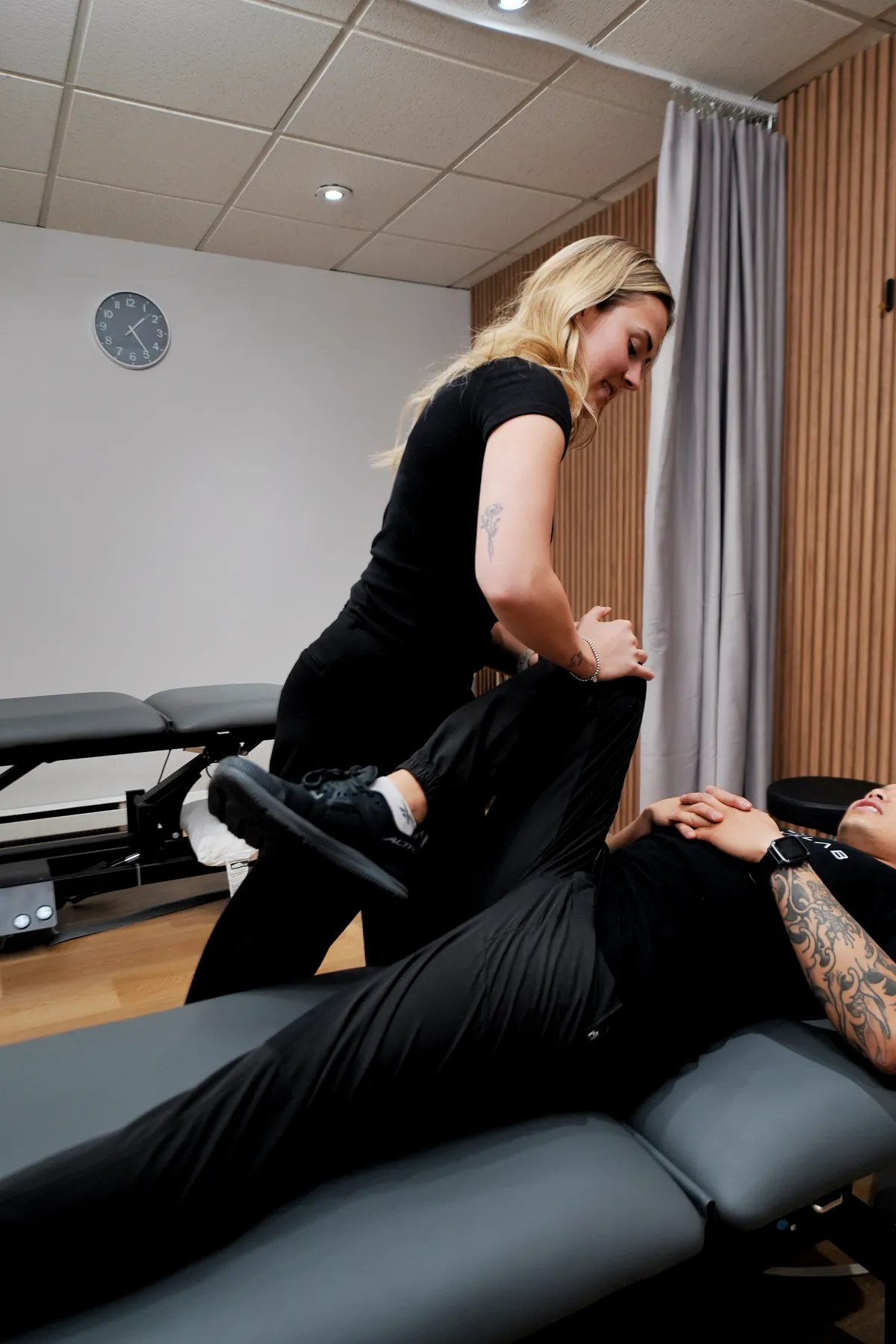
A practical plan may combine education, movement options, progressive exercises and hands-on care. We can explore ways to vary your positions during the day and adapt activities that aggravate symptoms. Your preferences and response help determine which techniques are used and how your plan progresses.
At our Bridgeland clinic and private training space, we connect care with the movements you want to return to. You can ask questions, discuss preferences and make decisions with your practitioner. If a different type of care is needed, we’ll explain the next step.
When medical advice comes first
Get medical advice if neck pain persists for several weeks, worries you, or occurs with symptoms such as pins and needles or a cold arm. Avoid driving or cycling when restricted neck movement makes it unsafe to look around.
QUESTIONS YOU MAY HAVE
Common questions about neck pain
Can desk work be part of the picture?
Long periods in one position can be relevant. We discuss your routine and the way your symptoms change through the day, rather than assuming a single posture explains every concern.
Is massage an option?
Massage may be considered for muscle tension and movement-related goals after assessment. Your therapist can discuss how it fits with exercise, home care or other services.
Can I book without knowing the cause?
Yes. You can start by describing what you feel and what it prevents you from doing. The assessment helps guide the choice of care.
Will I get exercises to do at home?
Your plan may include exercises or movement guidance selected for you. Ask your practitioner how to use the plan and what changes should prompt a follow-up.
FROM THE MOVEMENT JOURNAL
Neck pain from desk work: massage or physiotherapy?
Read the articleFurther reading
General information, not a personal diagnosis. These public patient resources informed the general symptom and medical-advice sections.