
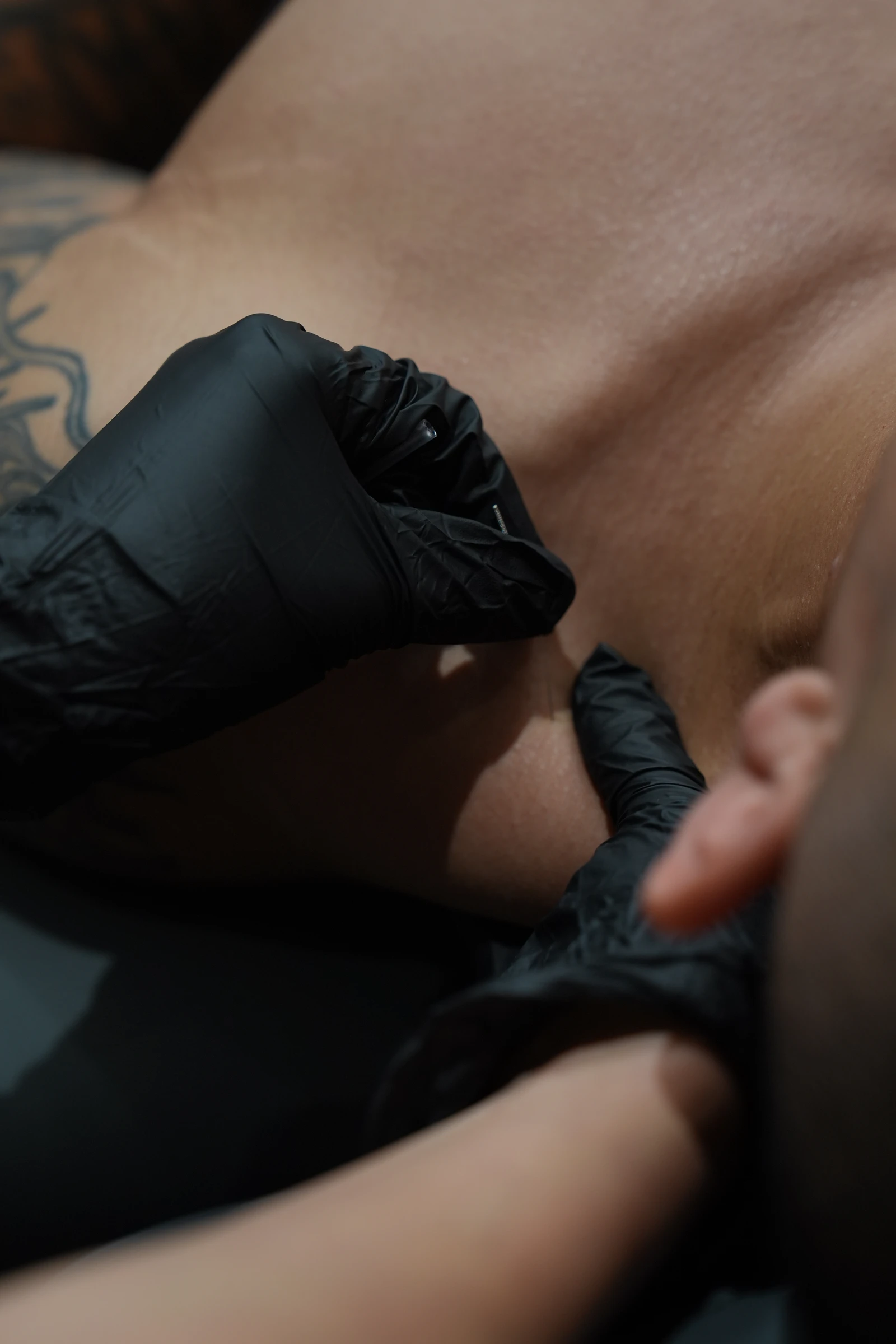
A shoulder that feels tight at your desk. A sore muscle that makes training uncomfortable. If you are looking into dry needling in Calgary, you may be wondering what it feels like and whether it belongs in your recovery plan.
At REVIVELAB, dry needling is an optional technique within physiotherapy. Your appointment starts with an assessment, a conversation about your goals, and a choice about the care you receive.
What is dry needling?
Dry needling uses a thin, solid needle to stimulate selected muscle tissue, often near a sensitive area called a trigger point. The needle contains no medication. A clinician may consider it to help with certain muscle-related pain or movement concerns, usually alongside exercise and other rehabilitation. Cleveland Clinic explains the technique and what a session may involve.
What can it help with?
The useful starting point is your symptom and what it stops you doing. A diagnosis or a feeling of tightness does not automatically mean dry needling is appropriate. Explore the guide closest to your concern before your assessment:
- Neck pain and stiffness, including discomfort while turning your head.
- Shoulder pain affecting reaching, lifting or exercise.
- Lower back pain affecting everyday movement.
- Running injuries or sports-related concerns that need a return-to-activity plan.
- Workplace and desk-related pain or recurring symptoms that deserve a closer look.
These links explain assessment options; they are not a list of conditions that dry needling will cure. If you are unsure how to describe a problem, start with our searchable Symptoms & Conditions directory.
How effective is dry needling?
Research results depend on the condition, the comparison treatment and the outcome measured. In one 2024 trial involving 78 people with mechanical neck pain, manual therapy plus exercise produced better outcomes than dry needling plus exercise. A separate small trial of chronic neck pain found improvements in some movement and disability measures when needling was added, but no advantage in pain at follow-up.
Those findings do not predict your individual response. They are a reason to discuss alternatives and track meaningful progress: turning to check traffic, tolerating a workday or returning to a chosen exercise. Your plan should be reviewed if a technique is not helping.
What does dry needling feel like?
You may feel a small prick, a deeper ache or a brief muscle twitch. Sensations vary. Tell your physiotherapist if you feel uncomfortable or want to stop; treatment does not have to be something you endure silently.
Temporary soreness can follow. Before leaving, ask what reactions to expect and what activity is appropriate for you. Read more about treatment sensations.
Risks, screening and your choice
Possible effects include soreness, bruising, minor bleeding and feeling faint. Rare serious complications include infection and a collapsed lung, with risk depending partly on the area treated. New chest pain or shortness of breath after needling needs emergency medical assessment. Increasing redness, heat or swelling warrants medical advice.
Tell your clinician about medications, blood thinners, pregnancy, recent surgery, immune conditions and previous reactions to needles. Your physiotherapist should explain benefits, limitations, risks and alternatives before seeking consent. You can decline or stop at any time. The College of Physiotherapists of Alberta’s patient guide explains these expectations.
What to expect at REVIVELAB
Book a physiotherapy assessment and mention your interest in dry needling. Melissa Chea, physiotherapist, takes a movement-focused approach that may include exercise, education, hands-on care and needling when appropriate.
- Bring your story. Explain when the symptoms started, what changes them, what you have tried and what you want to return to.
- Discuss the options. Ask why a technique is being considered, what alternatives exist and how progress will be assessed.
- Leave with a plan. Clarify your next steps, any activity adjustments and when to follow up.
Your day-to-day demands matter. Our guides for desk and remote workers, runners, lifters and manual workers can help you prepare questions. Browse Who We Serve for other work, sport and life situations.
Looking for dry needling near you in Calgary?
REVIVELAB is at 217 4 St NE, Unit 105, in Bridgeland. If you are searching for dry needling in northeast Calgary, check our location, parking information and clinic hours. Coming from southeast Calgary or another part of the city? Plan your trip to this same Bridgeland location.
When choosing a dry needling treatment clinic, ask who will assess you, how suitability is determined and what happens if you prefer another option. Explore our dry needling service page or treatment prices before booking.
Common questions
Is dry needling the same as acupuncture or IMS?
The terminology can overlap. In Alberta physiotherapy, dry needling is an umbrella term that includes approaches such as acupuncture, intramuscular stimulation (IMS) and trigger point needling. Training and treatment rationale vary. Ask your physiotherapist which approach they propose and why. See the Alberta College’s explanation.
How many appointments will I need?
There is no fixed number for everyone. Your assessment, goals and response guide recommendations. Ask when you will reassess the plan and what progress would make continuing worthwhile.
Can I have physiotherapy without needles?
Yes. Dry needling is optional. Let your physiotherapist know your preference so you can discuss other suitable approaches.
Is dry needling covered by benefits?
At REVIVELAB it may be provided within physiotherapy care. Confirm the appointment type and fees with the clinic, and ask your insurer about your specific coverage. Direct billing does not guarantee reimbursement.
Explore symptoms, conditions and who we help
These directories cover all our care guides, including concerns that may need other services. A link does not mean dry needling is suitable for that condition or person.
Browse all symptom sections
Search the full Symptoms & Conditions directory
- Neck and upper back
- Lower back, pelvis and tailbone
- Headaches, jaw and facial muscle concerns
- Shoulder and shoulder blade
- Elbow and forearm
- Wrist, hand and thumb
- Hip and groin
- Knee
- Lower leg, ankle and foot
- Nerve-related symptoms
- Sports, exercise and repetitive-use injuries
- Women’s pelvic health
- Arthritis, persistent pain and longer-term concerns
- Injury, surgery and accident recovery
- Movement and everyday function
Browse all condition and concern guides
Explore Conditions We Help With
- Headaches
- Jaw Pain
- Neck Pain
- Whiplash
- Shoulder Pain
- Tennis and Golfer's Elbow
- Rotator Cuff Injuries
- Wrist and Hand Pain
- Lower Back Pain
- Hip Pain
- Sciatica and Leg Pain
- SI Joint–Related Pain
- Knee Pain
- Shin Splints
- Plantar Heel Pain
- Runner's Knee
- Achilles Tendon Pain
- Ankle Sprains
- Running Injuries
- Sports Injuries
- Motor Vehicle Accident Injuries
- Persistent or Recurring Pain
- Golf Injuries
- Workplace & Desk-Related Pain
- Post-Surgical Rehabilitation
- Pelvic Floor Dysfunction
- Pregnancy & Postpartum Rehabilitation
- Pelvic Pain
- Urinary Incontinence
Browse everyone we help
Explore the Who We Serve directory
- Runners & endurance athletes
- Cyclists & active commuters
- Lifters & strength athletes
- New & returning exercisers
- Weight loss, muscle & body recomposition goals
- Golfers & racquet-sport players
- Team-sport athletes
- Hikers & winter-sport enthusiasts
- Dancers & movement artists
- Desk & remote workers
- Trades & manual workers
- Healthcare & on-your-feet workers
- Drivers & frequent travellers
- Pregnancy & postpartum
- Parents, caregivers & family training
- Active older adults
- Injury & surgery recovery
- People living with recurring pain
Start with an assessment
You do not need to decide on a technique before you arrive. Book physiotherapy at REVIVELAB, or contact the team if you need help choosing an appointment.
General patient education; an individual assessment is needed to determine suitable care.